

Eric Poe, Esq., CPA is a seasoned insurance executive and consumer-rights advocate whose leadership at CURE auto insurance and NJ PURE has contributed to major industry advancements. As CEO and chief marketing officer of CURE, Eric Poe oversees underwriting, claims, business strategy, rate filings, and advocacy efforts that directly relate to the complexities of auto insurance systems. His work in multiple states, including testimony before legislative bodies, reflects extensive experience with policies that affect how drivers are insured and how claims are handled. This background provides useful context for understanding at-fault and no-fault auto insurance, a topic central to how drivers secure compensation after accidents and navigate state-specific insurance rules.
Understanding At-Fault and No-Fault Auto Insurance
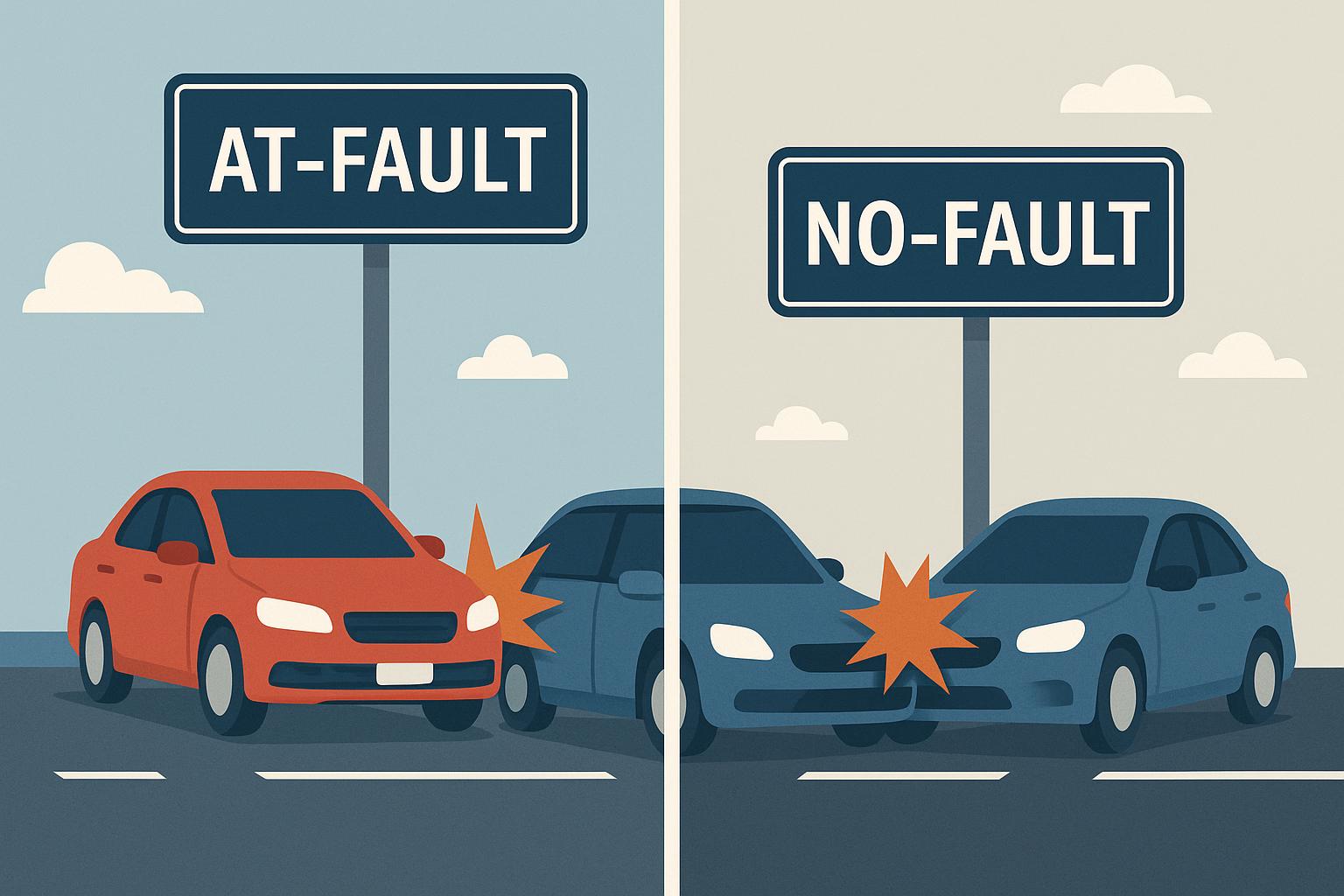
In the United States, each State maintains either at-fault or no-fault laws that impact insurance policies, which in turn impact payments following an automobile accident. Most states maintain at-fault policies, meaning that one party is generally considered “at-fault” and assumes responsibility for covering the injuries of the other driver and their passengers in the event of an accident.
In at-fault jurisdictions, the at-fault party must cover the various expenses associated with the accident, including damage to other vehicles, property damage, and medical expenses, usually through their liability insurance coverage.
In some cases, states may observe degrees of fault. If experts determine that one party is 49 percent to blame for an accident, they can still recover 51 percent of their damages. If insurance companies find a party at 51 percent or more at fault, you could be barred from recovering compensation.
Meanwhile, in no-fault states, fault may not need to be determined for bodily injury claims. All drivers involved in an accident must rely on their own insurance policy’s personal injury protection (PIP) coverage for compensation—for lost wages, medical bills, and other expenses—regardless of who caused the accident. Essentially, if there’s an accident, each person’s PIP coverage typically pays for their respective medical bills and/or wage loss up to their policies’ limits, no matter who is to blame for the accident. That said, drivers in no-fault states may still have the option to sue an at-fault driver under specific circumstances.
At-fault and no-fault auto accident policies have various considerations. No-fault insurance processes, on average, are faster compared to at-fault insurance processes. To determine fault, individuals must submit comprehensive accident reports to their insurance companies, who will subsequently enlist claims adjusters to investigate the accident. Investigations involve a thorough review of all available information, including interviews with witnesses, as well as law enforcement officers and emergency medical providers on the scene.
Claims adjusters can take weeks or even months to finalize a report. Determining fault becomes more complicated if another party’s insurance provider disagrees with the first party’s findings. In these cases, drivers may need to go to court to settle payment disputes. No-fault insurance policies consist of a more streamlined claims process, with a lower likelihood of legal conflicts. All parties receive necessary payouts in a timely fashion.
The differences between at-fault and no-fault auto insurance systems can heavily impact insurance payments for drivers. The state of Michigan, for example, redesigned its no-fault auto insurance system in 2020. Leading up to the overhaul, Michigan drivers were required to carry unlimited PIP coverage. As a result, the state’s drivers paid the highest insurance rates in the country. Changes made to the system provided drivers with the option of choosing their level of personal injury protection coverage or to opt out, as opposed to being forced to purchase unlimited coverage. Over the years, more than 7 million licensed drivers in Michigan have enjoyed considerable savings on their auto insurance.
In conclusion, no-fault insurance policies offer many benefits. They help to make the claims process more efficient, provide quick payouts to all parties without having to prove fault, and limit legal battles.
About Eric Poe
Eric Poe is an insurance executive from Princeton, New Jersey who leads CURE auto insurance and has also guided NJ PURE. As CEO and chief marketing officer of CURE, he directs operations across underwriting, claims, loss control, and business strategy while supporting media and advocacy initiatives. He has testified before legislative committees on insurance issues and has been recognized by organizations such as NJBIZ and the African American Chamber of Commerce of New Jersey. He holds a degree in accounting from the University of Colorado and a law degree from Seton Hall University.