


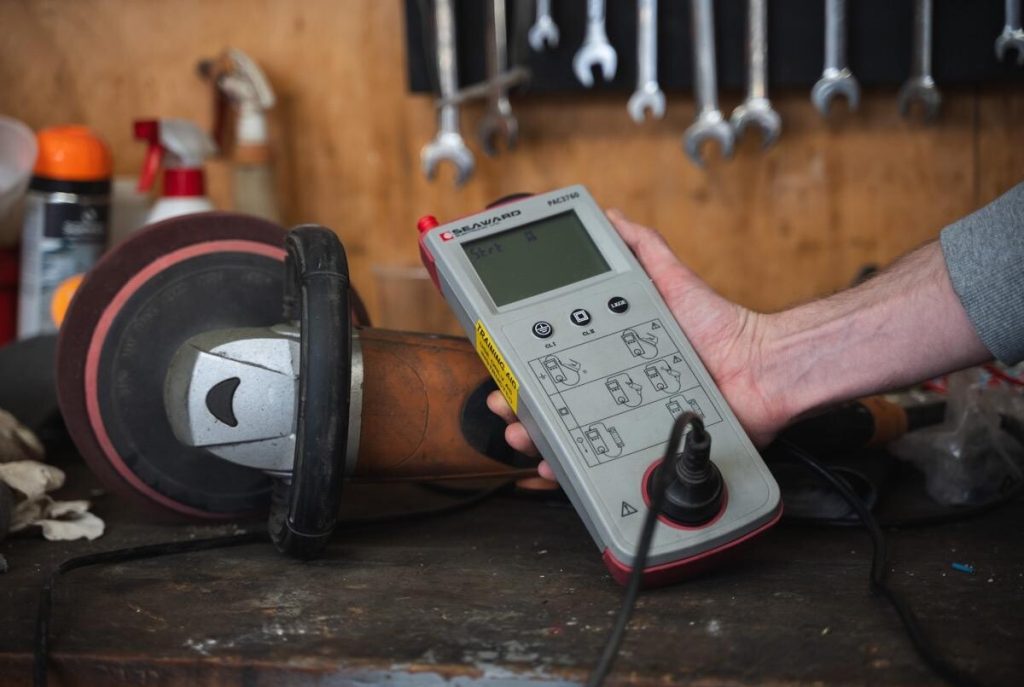
A PAT tester under $1000 looks like a bargain. But the cheapest portable appliance testers in NZ are usually basic “compliance testers”, and the gaps can cost you more in time, extra equipment and risk than you save. Here is what to check before you buy a test and tag machine. Before going through the list, let me say in some cases testers under $1000 will be suitable for certain companies’ needs so it pays to do your research. Let’s dive in.
7 reasons to think twice before buying a portable appliance tester under $1000
- Pass or fail, with no test values. The most basic PAT testers often only show pass or fail, so you can’t see how close an item came to failing. Without numerical test values, your test and tag records are hard to audit.
- A weak earth test. Many budget testers only run a 100/200mA earth bond test. That suits IT equipment, but in our opinion it isn’t enough for Class I items like fridges, extension leads, microwaves or different industries like hire or cleaning. A 10A or 25A earth test checks the integrity of the earth, not just its continuity.
- Hand-written records and tags. Entry-level testers usually have little or no memory, so you log results and write tags by hand. AS/NZS 3760:2022 requires every tag to show who tested it, the test date, a retest date and a reference to the standard, and in New Zealand a register of the equipment tested. A tester with memory and a printer produces compliant tags straight from the results.
- No RCD testing. RCDs are now in the title of AS/NZS 3760:2022, yet some budget testers can’t test them at all, so you end up buying a second instrument.
- Limited test options. Cheaper PAT testers usually offer fewer tests, such as no 250V insulation test for sensitive equipment.
- You still have to calibrate it. The standard (Appendix A, A6) says verification should be against a calibrated source, and most manufacturers recommend annual calibration. Calibration is an ongoing cost, whatever the tester costs, so the purchase price is only part of the story. If purchasing a PAT make sure to ask about the cost of calibration as sometimes cheaper portable appliance testers can cost more.
- You may outgrow it. Hand-logging gets slow fast. When your item count grows, you end up buying a second tester. This sets you up for having to buy another portable appliance tester that has more capabilities and options like printing – in other words you actually pay twice.
Price isn’t everything
Not every tester under $1000 is poor, and not every expensive one is good. Some budget PATs do run a 10A earth test, and some pricier testers are still compliance-only. Check the specs, not the price tag. We believe in looking for a safety tester, not just a compliance tester.
At the end of the day, do your research.
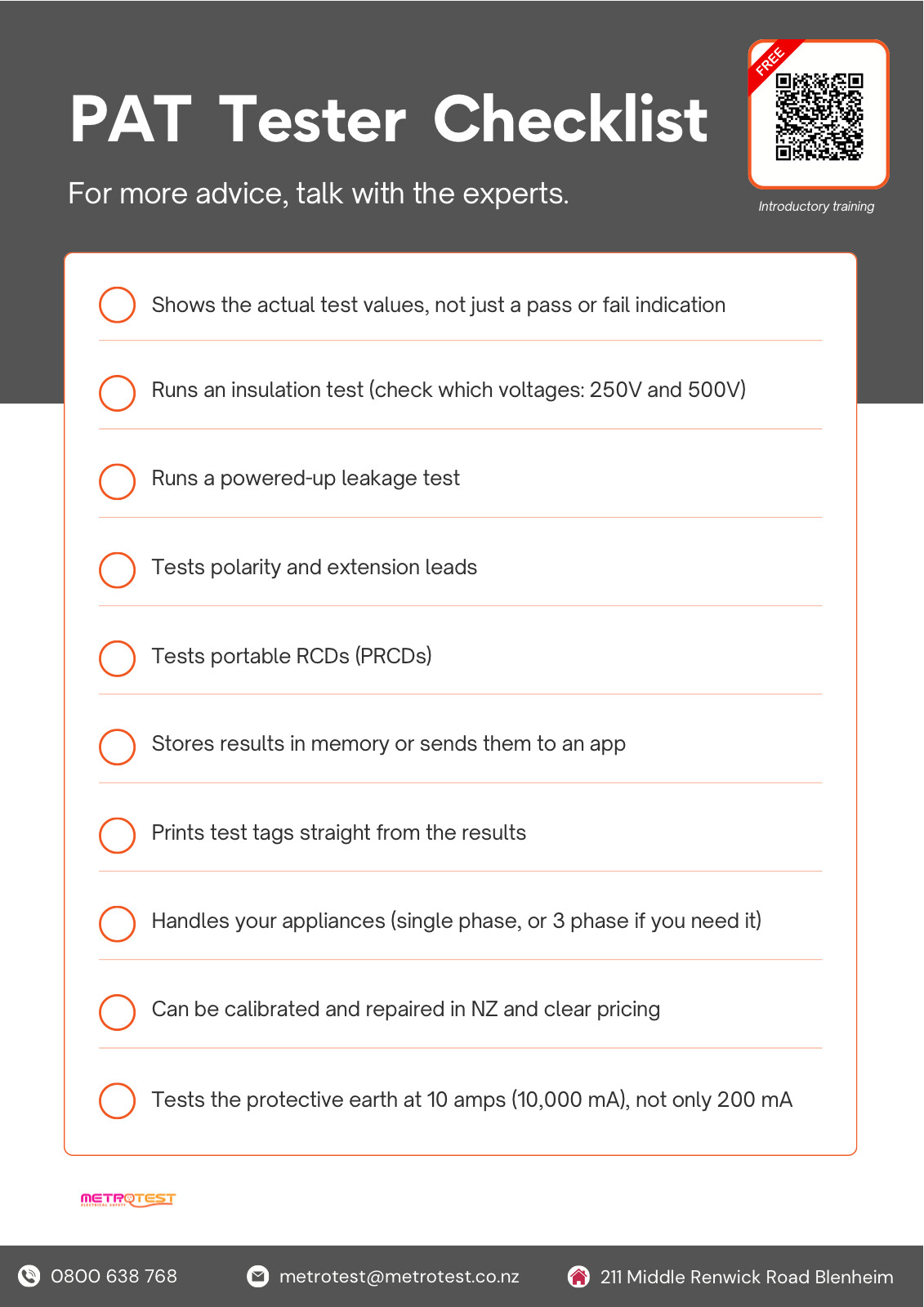
Before you buy a PAT tester, check that it can:
- run a 10A or 25A earth bond test
- show and store numerical test values
- print tags straight from stored results
- test RCDs
- run the insulation tests you need
- be calibrated and repaired in New Zealand
Keep our portable appliance tester checklist below handy for when you are looking for a PAT tester and what to watch out for.

Not sure? Rent a PAT or get it tested for you
If you only test now and then, you may not need to buy at all. You can use our PAT tester hire service from $200 + GST for a 5-day hire, and every hire tester is calibration-checked before it goes out. Or let our technicians do your on-site test and tag for you.
Choosing a PAT tester in NZ
Metrotest has supplied, calibrated, repaired and used PAT testers in New Zealand for decades. Browse our portable appliance testers, or call us on 0800 638 768 and we’ll help you choose the right test and tag machine for your workplace.
Safe testing, everyone!

